Australian retail executives do not understand their customers, or their customers’ expectations, nearly as well as they think they do. That is the key finding from research conducted by Oracle NetSuite in partnership with Wakefield Research and Bob Phibbs, the Retail Doctor.
The global study surveyed 1,200 consumers and 400 retail executives across the U.S., U.K. and Australia. It found a wide disconnect between what shoppers want and what retailers actually deliver, across in-store experience, technology, staff interaction and personalisation. In Australia specifically, the biggest gaps showed up around in-store shopping plans, social media engagement and staff interaction.
These findings should prompt retail executives to take a closer look at where they are investing. Retail stores, technology, customer service and marketing budgets are only effective when they are built around what customers actually want, not what executives assume they want. This is where a modern retail shop software approach, backed by real customer data instead of guesswork, becomes so important.
In-Store vs Online Shopping
The survey found a clear mismatch in expectations around where shopping will actually happen. While 54 percent of Australian retail executives believe consumers will do more in-store shopping in 2019, only 33 percent of consumers agreed. That is a 21 point gap between what retailers expect and what shoppers actually plan to do.
Some in-store investments do appear to be paying off. 57 percent of Australian respondents said the retail environment is more inviting than it was five years ago, which suggests that efforts to improve store design and atmosphere have not gone unnoticed. Even so, there is clearly more work to do. Australian consumers still want simplicity above almost everything else. Simpler store layouts were cited by 41 percent of respondents as a reason to visit a physical store instead of shopping online, the highest of any option in the survey. On top of that, 67 percent believe the most appealing retail stores are the ones that simplify and streamline the shopping experience.
This is a useful reminder that technology investment should not add complexity to the shopping experience, it should remove it. A cloud based POS system that gives staff instant access to stock levels, pricing and order history can help a store feel simpler and faster to shop in, rather than slower and more confusing. Retail POS system features such as fast checkout, accurate real-time inventory and easy returns processing all support that goal directly.
Leave Me Alone: The Staff Interaction Gap
There is also a disconnect between how consumers want to be treated in-store and how retail executives think they want to be treated. Among executives, 87 percent believe that consumers would feel more welcome if in-store staff interacted with them more. Less than half of Australian consumers, just 46 percent, agree, and 29 percent said extra interaction would actually make them feel more annoyed.
A similar pattern shows up online. 48 percent of Australian consumers said they never use AI-assisted chat windows, and only 4 percent said they use them all the time. When it comes to the technology consumers actually want while shopping, in-store or online, the top three choices were self-checkout kiosks at 30 percent, VR try-on at 26 percent, and mobile payments at 14 percent. Only 1 percent of Australian consumers said they want to use robots and chatbots while shopping.
The lesson here is not that technology or staff interaction is unwanted, it is that both need to be optional and unobtrusive. Retailers who invest in self-service tools such as self-checkout kiosks and mobile payments are giving customers more control over how much interaction they want, which is exactly what this data points to. A well set up POS Retail Solutions strategy supports both paths at once, letting a customer choose a quick self-service checkout or a staff-assisted one depending on their mood that day.
Not So Social: The Social Media Disconnect
Retail executives looking to social media to bridge the gap with customers may be disappointed by these results. According to the survey, 100 percent of Australian retail executives believe that engaging with customers on social media is important to building stronger relationships. Yet only 10 percent of Australian consumers think social media has a significant impact on how they feel about a brand, and 35 percent said they do not interact with brands on social media at all.
This gap suggests that social media strategy needs to be judged on its own terms rather than treated as a universal fix for customer relationships. For some brands and some audiences, social engagement genuinely matters. For many Australian shoppers, based on this data, it is simply not the channel that shapes how they think or feel about a retailer. Executives may get more value from investing in personalisation and in-store experience than in expanding social media efforts alone.
Making It Personal
The survey results do offer some promise for retail executives, provided personalisation is done well. Almost half of Australian consumers, 40 percent, said they would pay more for improved personalisation. Despite that appetite, only 3 percent of Australian retail executives fully believe their staff have the tools and information needed to deliver a personalised experience.
The gap shows up clearly in how consumers feel today. 85 percent of Australian consumers said they do not feel they are given a personalised shopping experience, either in-store or online, and 58 percent said they are uncomfortable with the way retailers currently use technology to improve in-store personalisation. Online personalisation fares even worse: 83 percent said they feel negative emotions when they receive personalised offers there.
This is where connected retail systems matter most. Personalisation only works when a retailer actually has a single, accurate view of each customer, their purchase history, preferences and past interactions, rather than fragmented data spread across separate systems. This is exactly the kind of problem that product and customer management POS capabilities are built to solve. Solutions such as TCS POS for NetSuite bring point-of-sale, inventory and customer data into one connected platform, giving staff a complete picture of a customer instead of a partial one.
Understanding the benefits of TCS POS for NetSuite starts with recognising that personalisation is a data problem before it is a marketing problem. Why choose TCS POS for NetSuite over a standalone system comes down to exactly this: TCS POS Integrations connect sales, loyalty and customer records directly into NetSuite, so staff are not guessing about a customer’s history, they can see it. Cloud POS features for NetSuite, combined with TCS NetSuite Customisation, let retailers tailor what information staff see and how offers are delivered, so personalisation feels helpful rather than intrusive, which is clearly what the 58 percent discomfort figure is warning against.
The broader NetSuite POS advantages extend beyond personalisation too. NetSuite POS benefits for retailers include consistent pricing and promotions across every channel, accurate stock visibility, and cloud POS billing software that supports flexible payment and loyalty options. For retailers running an online POS system for retail alongside physical stores, this consistency is what allows personalisation to actually feel personal, rather than contradictory between channels.
Wait and See with Hot New Technology
The survey findings also suggest caution around buzzword-heavy technology investments. While 78 percent of Australian retail executives believe having AI and VR in stores will increase sales, only 14 percent of Australian consumers believe those technologies will have a significant impact on their purchase decisions.
This is a useful gut check for retail leaders. Flashy technology is not automatically valuable technology. The consumer preferences elsewhere in this survey, favouring simpler layouts, optional interaction, and genuine personalisation over gimmicks, point to where investment is actually likely to pay off. A cloud-based retail POS platform that gets the fundamentals right, accurate inventory, fast checkout, and connected customer data, will likely do more for sales than AI or VR features that customers are not asking for.
Retailers exploring newer technology should also not overlook the operational side of the business. NetSuite freight integration options, including the Smart Freight connector for NetSuite, can quietly improve the customer experience by making shipping faster and more predictable, without requiring flashy in-store gadgets at all. Sometimes the biggest improvement to customer experience comes from what happens after checkout, not from what is on the shop floor.
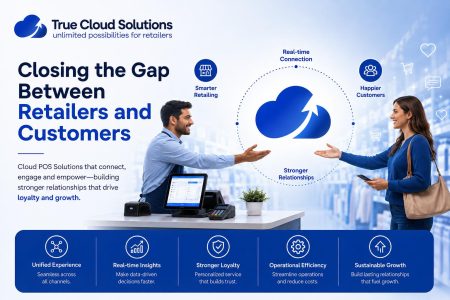
Closing the Gap Between Retailers and Customers
Taken together, these findings paint a clear picture. Australian retail executives are confident about what customers want, but that confidence is often not backed up by what customers are actually telling researchers. The gap is largest in the areas that matter most day to day: how shoppers want to be treated, how personalised their experience feels, and how simple the process is from browsing to checkout.
Closing that gap does not require guesswork. It requires better visibility into customer behaviour and preferences, and systems that make that information available to staff at the point of sale rather than buried in a separate database. Retail POS system features that unify inventory, customer profiles and sales history give retailers a factual starting point for decisions, instead of assumptions. Whether that means adopting TCS POS Software, improving retail shop software more broadly, or simply auditing which technology investments customers actually value, the survey makes one thing clear: closing the gap between what retailers believe and what customers want should be the top priority for 2019 and beyond.
FAQs: Australian Retail Consumer Expectations Survey
Q: What did the Oracle NetSuite retail survey find?
A: The survey found a wide gap between what Australian retail executives believe customers want and what customers actually want. The biggest differences showed up in expectations for in-store shopping, staff interaction, social media engagement and personalisation.
Q: How big is the gap between Australian retail executives and consumers?
A: It varies by topic, but some gaps are large. For example, 87 percent of executives believe more staff interaction makes shoppers feel welcome, while only 46 percent of consumers agree. In personalisation, just 3 percent of executives feel their staff are fully equipped to deliver it, even though 40 percent of consumers say they would pay more for it.
Q: Do Australian consumers want more in-store shopping in 2019?
A: Not as much as executives expect. 54 percent of executives believed consumers would shop in-store more in 2019, but only 33 percent of consumers actually agreed with that prediction.
Q: What do Australian shoppers value most in a physical store?
A: Simplicity. 41 percent of respondents cited simpler store layouts as their top reason for choosing a physical store over shopping online, and 67 percent said the most appealing stores are the ones that simplify and streamline the shopping experience.
Q: Do Australian consumers want more staff interaction in stores?
A: Not necessarily. While most executives assume more interaction improves the experience, only 46 percent of consumers agree, and 29 percent said extra interaction would make them feel more annoyed rather than more welcome.
Q: How important is social media to Australian shoppers?
A: Less important than retailers assume. All surveyed executives said social media engagement is important to customer relationships, but only 10 percent of consumers said it has a significant impact on how they feel about a brand, and 35 percent do not interact with brands on social media at all.
Q: Do Australian consumers feel retailers offer a personalised experience?
A: Mostly no. 85 percent said they do not feel they receive a personalised shopping experience, in-store or online, and 58 percent are uncomfortable with how retailers currently use technology for in-store personalisation.
Q: Why do so few retail executives feel prepared to deliver personalisation?
A: The main issue is fragmented customer data. When purchase history, preferences and past interactions sit in separate systems, staff cannot see the full picture of a customer. Connecting product and customer management POS data through a platform such as TCS POS for NetSuite is one way retailers can close this gap.
Q: Do AI and VR actually influence Australian shoppers’ purchase decisions?
A: Not as much as executives think. 78 percent of executives believe AI and VR in stores will increase sales, but only 14 percent of consumers believe these technologies significantly affect their purchase decisions.
Q: How can retailers close the gap between what they believe and what customers want?
A: By replacing assumptions with data. Retail POS system features that unify inventory, sales and customer information give retailers a factual view of behaviour instead of guesswork. Tools such as a cloud based POS system, retail shop software built for connected data, and NetSuite POS benefits for retailers like consistent pricing and stock visibility all support decisions grounded in what customers actually do, not just what executives assume.
For more details on the findings, including breakdowns by region and generation, see the full report, The Future of Retail.