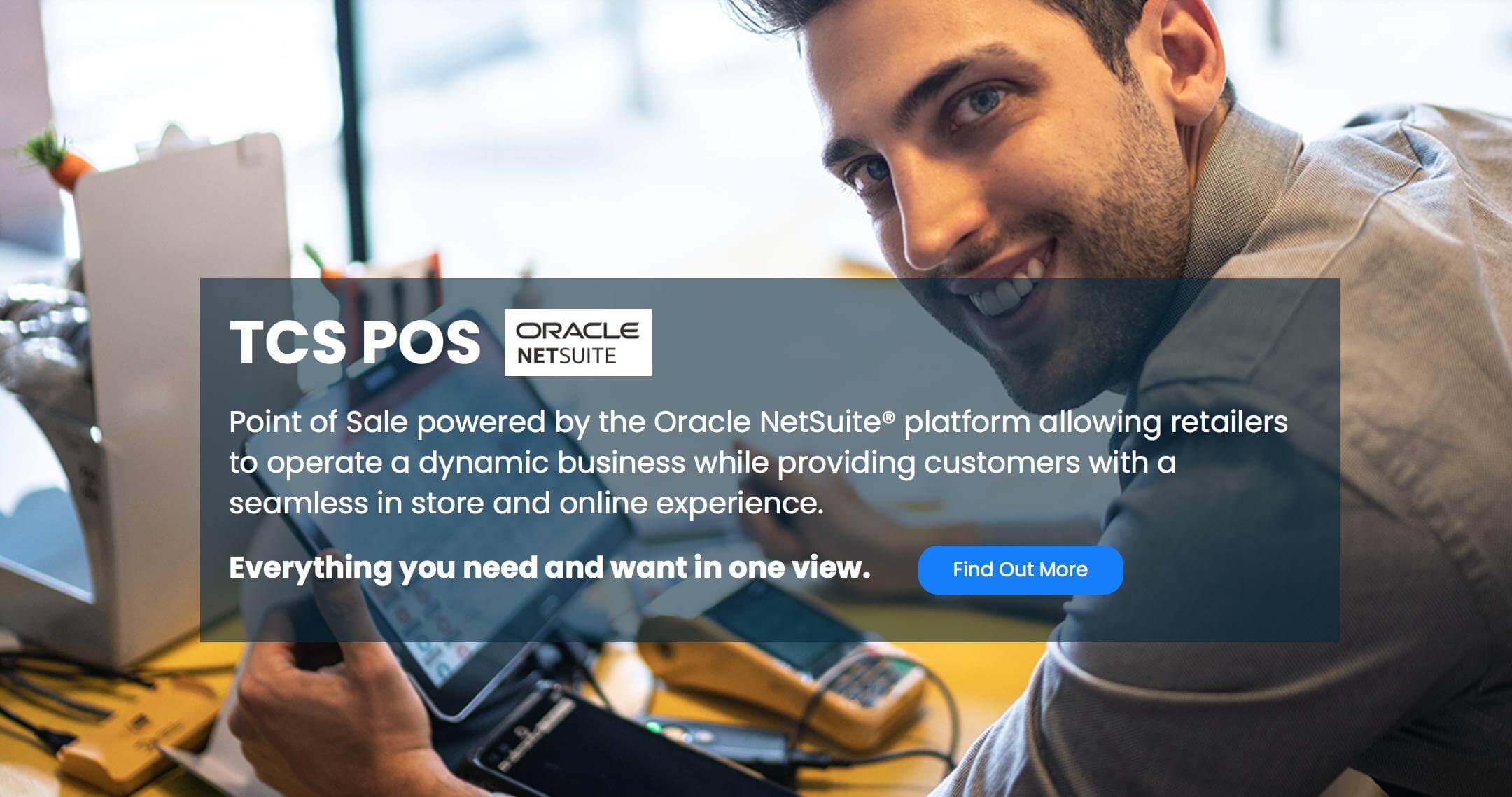
Retail businesses need efficient tools to manage sales, inventory, payments, and customer information. These operations can be streamlined with a Cloud Based POS System by linking retail transactions to a central business database. This allows companies to track performance, keep track of inventory, and gain valuable insights across various sites.
Retailers with a NetSuite ERP system can also benefit from the integration of POS software with their ERP system to ensure data consistency and simplify daily operations. However, understanding the features, advantages, disadvantages, and integration requirements is essential before selecting a solution.
What Is a Cloud-Based POS System?
A Cloud Based POS System is a digital platform that processes retail transactions and stores or synchronizes business information through cloud infrastructure. Unlike traditional POS systems that rely heavily on locally stored data, cloud-based solutions allow authorized users to access supported features through internet-connected devices.
Common capabilities include:
- Processing sales, refunds and customer payments.
- Monitoring stock and availability.
- Creating sales reports and performance summaries.
- Customer records and purchasing history.
- Centralized Dashboard for multiple stores monitoring.
- Linking retail operations with accounting and ERP systems.
Key Features of a Cloud-Based POS System
Here are some of the features a modern cloud POS platform provides for daily retail operations.
Centralized Inventory Management
By managing inventory, retailers can ensure they have the right products available and prevent overstocking or stockouts. Businesses can monitor inventory levels, stock movements, and have low inventory warnings, and can also keep an eye on product availability at various stores or warehouses based on the platform used.
Sales Reporting and Analytics
A sales report gives knowledge about business performance. Retailers can review daily sales, discover popular products, compare store performance, and get an analysis of purchasing trends. This information provides managers with opportunities for improvement.
Multi-Store Management
Retail chains can control multiple locations for products, pricing, promotions and sales data. As businesses grow, centralized management also ensures the consistency of business processes.
Payment and Customer Management
Retailers can process payments efficiently with supported payment integrations. Customer management capabilities can keep track of purchase histories, enable loyalty programs, and enhance business to consumer shopping experiences.
Integration With Business Applications
Cloud POS systems can integrate with ecommerce platforms, accounting software, inventory management systems, and ERP software. These integrations help to minimize repetitive data entry and enhance information sharing across the departments.
Advantages and Benefits of Cloud POS Systems
Cloud POS technology offers several benefits for businesses seeking more efficient retail operations.
- Remote access: Approved users can obtain approved business data from other sites.
- Enhanced efficiency: Streamlined workflows that eliminate repetitive administrative tasks.
- Improved stock visibility: Accurate information on stock makes replenishment decisions easier.
- Scalability: Companies can grow without having to depend on building extra on-site facilities.
- Centralized reporting: Managers can check on performance in various stores in consolidated reports.
- Ease of maintenance: Cloud infrastructure and software updates are often managed by providers.
- Improved coordination: Connected systems help retail, inventory, and finance teams work with more consistent information.
Disadvantages of Cloud POS Systems
Despite its benefits, cloud POS technology has limitations that businesses should evaluate before implementation.
- Internet dependency: Certain features require a stable Internet connection. Cloud access and data synchronization could be disrupted due to connectivity issues. Retailers should find out if there is offline transaction processing available.
- Subscription and integration costs: Recurring software costs, hardware investments, payment processing, customization, and implementation can add up to the total cost of ownership.
- Security and privacy issues: Customer data and transaction logs must be protected with proper access controls, secure setups, and data backups.
- Integration challenges: Connecting a POS platform with existing business applications may require additional development or third-party integration tools.
- Training needs: Staff may need to adopt new processes, and data transfer from legacy systems must be carefully planned.
Key Considerations for Cloud POS Integration With NetSuite
Retailers can streamline their operations, sync business data and increase efficiency by connecting a cloud POS system to NetSuite. Deciding on the right solution involves assessing integration compatibility, data synchronization, and overall business needs.
Cloud POS for NetSuite
A Cloud POS for NetSuite connects retail transactions with ERP workflows, helping businesses manage sales, inventory, customer information, and financial records in one connected system. It reduces manual data entry, increases the accuracy of data and makes daily tasks easier.
Retail POS Software NetSuite
When retailers select the compatible Retail POS software NetSuite, they can integrate the point-of-sale with current business processes. The right solution needs to accommodate inventory accuracy, pricing and tax rules, hardware compatibility, reliable technical support, and cost-effective implementation.
Cloud POS With NetSuite Sync
A Cloud POS with NetSuite Sync enables seamless data flow between the retail and ERP systems, ensuring business records are accurate. Key features are real-time data synchronization, error checking and handling, and data validation and conflict resolution to maintain consistent information across systems.
How to Choose the Best POS System Integrated With NetSuite?
Selecting the Best POS system integrated NetSuite requires comparing available platforms against business requirements rather than relying on feature lists alone.
Consider the following criteria:
- Compatibility with the existing NetSuite environment.
- Support for multiple retail locations and sales channels.
- Inventory, order, and financial data synchronization.
- Ease of use and employee training requirements.
- Hardware compatibility and payment options.
- Vendor support, scalability, and total implementation costs.
Request a product demonstration using realistic sales transactions and inventory scenarios before making a final decision.
How AI Improves Cloud POS Systems?
Retailers can use AI to analyze business data and uncover patterns that can aid in decision-making. Depending on the platform, AI-powered features may include:
- Demand forecasting: Estimate future product demand using historical sales data.
- Inventory suggestions: Determine inventory requirements for replacement.
- Sales analysis: Highlight changes in revenue and purchasing patterns.
- Customer insights: Customer segmentation and relevant product recommendations.
- Anomaly detection: Identify unusual transaction patterns for further investigation.
- Auto report: Summarize business performance & identify areas of focus.
The capabilities of AI vary among providers, and effective outcomes rely on quality and proper configuration of data. Before investing in an AI-powered platform, businesses should check what features are available.
Conclusion
A Cloud Based POS System enables retailers to control sales, monitor stock or streamline operations in multiple locations. It provides features like centralized reporting and increased efficiency, however there are some costs, internet connectivity and data security considerations that must be taken into account.
For NetSuite users, a compatible POS integration connects retail transactions with inventory and financial workflows. Evaluating integration reliability, essential features, and long-term costs helps businesses choose a solution that supports their operational needs and future growth.
FAQs
Can a cloud POS system manage inventory across multiple locations?
Yes, a cloud POS system can help retailers monitor stock levels across multiple stores and warehouses. Depending on the platform, it can synchronize inventory updates, identify low-stock products, and improve stock visibility.
Can a cloud POS system help reduce inventory errors?
Yes, automated inventory updates and synchronized records can reduce manual entry errors and improve stock visibility. Accurate results depend on reliable integrations, correct product data, and consistent inventory procedures.
How secure is a cloud-based POS system?
Security depends on the provider’s infrastructure and configuration. Businesses should look for secure data transmission, user access controls, regular backups, payment security measures, and compliance with applicable data protection requirements.
Can TrueCloud Solutions customize its POS software?
Yes, we offer customization services to help businesses adapt POS functionality to their operational requirements. Retailers can discuss specific workflows and development needs with its team.
Does TCS POS require a separate database for NetSuite?
No, TCS POS states that it operates natively on the NetSuite platform, with business data maintained within NetSuite rather than a separate POS databas.