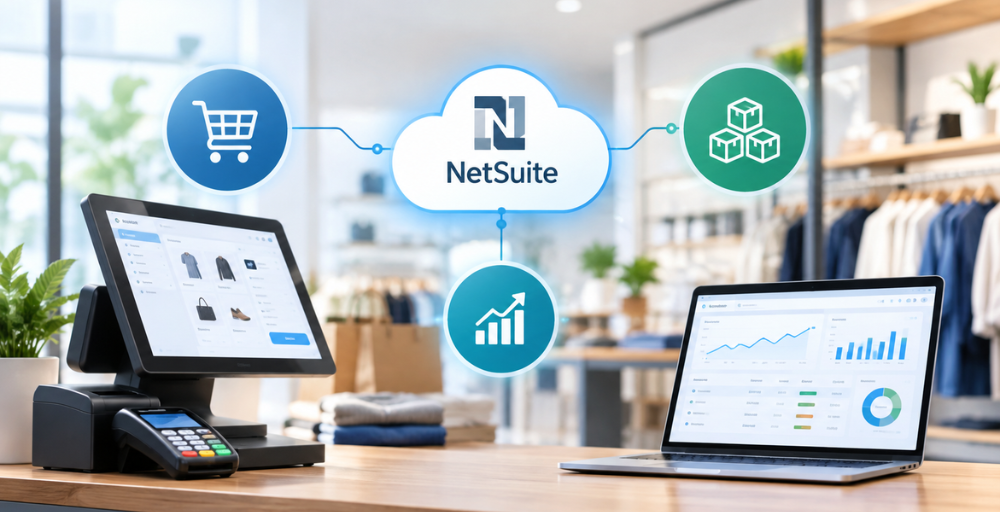
Retailers require an easy-to-use solution for sales, inventory, customers, and store management. When the point of sale and business management applications operate separately, they often spend extra time entering data and checking information across different platforms. A NetSuite Retail Point of Sale solution integrates retail transactions with NetSuite, enabling businesses to manage their retail transactions and inventory from a more connected system.
What Is a NetSuite Retail Point of Sale?
NetSuite Retail Point of Sale integrates the checkout process into NetSuite’s full business management solution. This provides retailers the ability to have key sales and stock data linked together rather than in different systems.
Key capabilities can include:
- Direct customer sales and transactions at the point of sale.
- Connecting sales transactions with NetSuite.
- Keeping product and inventory information more organized.
- Managing returns and exchanges.
- Handling the return and exchange of products.
- Improving visibility of retail transactions.
Smart Ways to Connect Retail Sales and Inventory With NetSuite
Integrate POS transactions, sales data, and inventory into NetSuite to make daily operations easier for retailers. Here are five practical ways to create a more connected retail workflow.
1. Connect Every Store Sale Directly With NetSuite
The first smarter idea is to link point-of-sale transactions to NetSuite instead of retaining the sales data in a different system. A point of sale (POS) system that integrates directly into the NetSuite application can aid the retailers to link transactions to their overall business processes.
This can help retailers:
- Ensure store sales data is linked to NetSuite.
- Minimize manual data entry.
- Keep accurate records of transactions.
- Provide back-office teams with improved sales data.
- Improve the flow of store and administrative activities.
2. Keep Inventory Data Connected to POS Transactions
When sales and stock information work together, it makes inventory management easier. All sales impact available stock levels, and maintaining these connections may provide a better understanding of product flow to retailers.
A NetSuite Retail Point of Sale solution can help retailers:
- Monitor product sales from retail outlets.
- Maintain more consistent inventory information.
- Recognize products that are more active in sales.
- Keep track of stock at various sites.
- Minimize manual inventory changes.
- Facilitate improved stock-management decisions.
3. Centralize Retail Information Across Multiple Locations
Having multiple stores with separate information can make it hard to manage them. Cloud technology can help retailers integrate sales and inventory data into a more centralized environment.
Some of the key Cloud POS capabilities for NetSuite can help retailers:
- Track sales in each store.
- Maintain centralized product information.
- Enhance visibility of location-level stock.
- Collaborate with stores and back office staff.
- Minimize reliance on multiple spreadsheets or systems.
- Develop standardised retail procedures at all outlets.
4. Use Connected Data to Make Better Inventory Decisions
Sales data can provide useful information about which products are selling quickly, which locations have higher demand, and where inventory may need attention. Connecting POS activity with NetSuite makes this information easier to use for everyday retail management.
Retailers can use connected sales and inventory information to:
- Identify fast-moving products.
- Understand sales patterns by location.
- Monitor changes in product demand.
- Review inventory levels more efficiently.
- Support replenishment planning.
- Make more informed stock-management decisions.
The benefits of TCS POS for NetSuite can include better visibility into connected sales and inventory activity, helping retailers work with more consistent information.
5. Build a Scalable Retail Operation With NetSuite
A POS system should support current retail operations while providing a foundation for future growth. Cloud POS features for NetSuite can help retailers connect POS, sales, inventory, and business information within a more unified operating environment.
Retailers can use this approach to:
- Add new retail locations more efficiently.
- Maintain consistent processes across stores.
- Connect new store transactions with NetSuite.
- Manage growing product catalogs.
- Reduce the complexity of disconnected systems.
- Give store and management teams access to connected information.
By connecting retail sales and inventory through NetSuite, businesses can create a more organized operating model that can support changing retail requirements.
Why Do Retailers Need a Connected POS System?
A separate POS system can create additional work when sales information needs to be transferred manually to another business system. The right Retail POS system features can help reduce these disconnected processes and make daily retail management more efficient.
Common challenges retailers face include:
- Manual entry of sales information.
- Delays in updating inventory.
- Limited visibility across store locations.
- Difficulty managing information from multiple systems.
- Increased risk of data-entry mistakes.
- Extra administrative work for store and back-office teams.
A connected POS solution can bring sales, inventory, and store information closer together, helping retailers maintain more consistent data and streamline everyday operations.
Conclusion
A connected POS system can help retailers bring sales, inventory, customers, and store operations closer together. Instead of maintaining separate processes, businesses can connect retail transactions with their existing NetSuite environment.
A NetSuite Retail Point of Sale solution provides a way to create this connection while supporting modern retail requirements. With cloud capabilities, integrated inventory information, and connected store operations, TCS POS for NetSuite can help retailers build a more organized and efficient retail workflow.
FAQs
How does Cloud POS work?
Cloud POS features for NetSuite help retailers connect store information across locations, centralize sales data, improve accessibility, and support flexible retail operations as their business continues growing efficiently.
Can NetSuite POS manage multiple stores?
Yes, a NetSuite Retail Point of Sale can support multiple stores by connecting transactions, product information, and inventory data, helping retailers maintain consistent processes across different locations effectively.
Is direct NetSuite POS useful?
A POS system that works directly inside NetSuite can reduce disconnected workflows by keeping retail transactions connected with relevant business information, helping employees manage store operations more efficiently daily.
Is NetSuite POS suitable for growing retailers?
A NetSuite Retail Point of Sale can support growing retailers by connecting store transactions with broader business processes and providing a scalable foundation for managing expanding retail operations.
Can POS transactions sync with NetSuite?
Yes, a POS system that works directly inside NetSuite can connect transaction information with NetSuite, reducing the need for separate data-entry processes and helping maintain consistent business records.